

Types of data collection methods and their uses for modern businesses

In this article, we’ll discuss data collection and its importance for modern businesses, exploring different data collection methods and sources. We’ll cover:
- The role of data collection in marketing for modern businesses
- Data collection by source of the data: primary and secondary
- Data collection by nature of the data: qualitative and quantitative
- Real examples of how top brands collect data from their audiences
Collecting audience data efficiently and ethically has become a top priority for many businesses. Whether you’re a CRM manager building segments using audience data or a marketing manager activating those segments through personalised campaigns, effective data collection is key for both strategy and execution.
In this article, we explore the main types of data collection by examining primary and secondary methods, comparing qualitative and quantitative approaches, and discussing first-party and zero-party data, both of which are essential in the modern business landscape.
What is data collection, and why is it essential for modern businesses?
Data collection is the structured process of acquiring information to gain insights into a relevant subject. For brands, media groups, sports teams, and other audience-driven businesses, collecting data helps build strong digital connections, understand user preferences, and ultimately boost revenue.
With evolving privacy regulations and the deprecation of third-party cookies, first- and zero-party data (voluntarily shared by individuals) have become the gold standard. These include everything from a person’s name and email address to personal details like lifestyle preferences, interests, or purchase intentions.
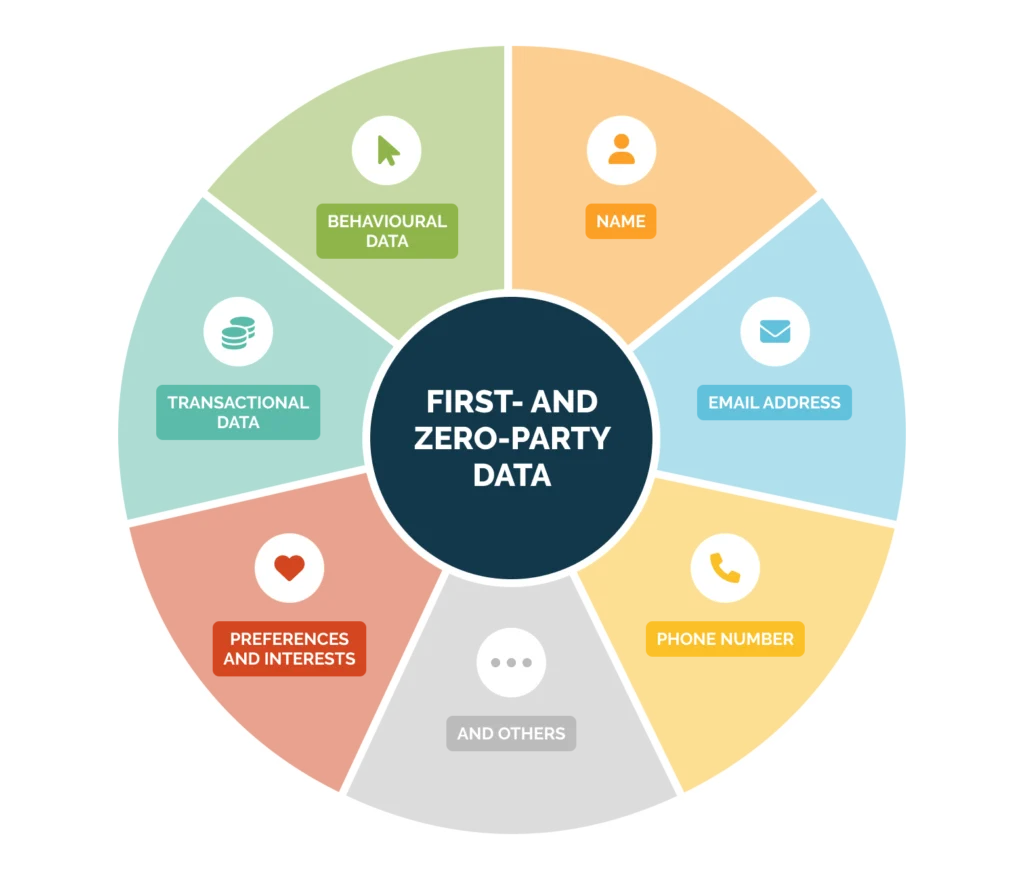
Here are a few examples of zero-party data in action and how businesses can make use of it:
- A consumer completes a form about their skin type, allowing a beauty brand to share tailored product recommendations.
- A news reader indicates interest in sports but not culture, enabling the newspaper to tailor their platform with relevant articles.
- A football fan expresses interest in a player’s jersey, prompting the team to offer an exclusive discount for that product.
These examples show the power of zero-party data when it’s collected intentionally to deliver meaningful experiences. But how do businesses collect this kind of information? Let’s explore the main types of data collection methods available today.
What are the different types of data collection methods?
Data collection methods are typically grouped in two main ways:
- By source of the data, as either primary or secondary.
- By nature of the data, as either quantitative or qualitative.
These classifications help businesses choose the most effective approach depending on their goals, resources, and the kind of insights they’re after.
Here’s a summary to quickly understand these classifications:
| Type of data | Description | Methods/sources | Uses |
| Primary | Collected directly from the source for a specific purpose | Surveys, focus groups, interviews, interactive marketing campaigns | To gather data tailored to reaching a goal or solving a problem |
| Secondary | Originally collected by someone else and reused for new purposes | Government stats, market reports, academic research | To understand and forecast market trends at a high level |
| Quantitative | Data that is measurable and statistically analysable | Online polls, web and app analytics, transactional data gathering | To track trends, measure performance, and analyse behaviour |
| Qualitative | Data that explores opinions, motivations, and emotions | Open-ended surveys, interviews, observations | To understand emotional drivers and shape messaging |
Types of data collection by source of the data
Data collection methods can be defined as primary or secondary, depending on the source from which the data originates.
Primary data collection and uses
Primary data collection refers to gathering information directly from the source. This approach provides businesses access to accurate, goal-specific data, often tailored to answer a particular question or solve a concrete problem.
Common primary data collection methods include interviews, focus groups, surveys, observations, and interactive marketing campaigns. Because the data is collected firsthand, it tends to be highly relevant and aligned with the business’s objectives.
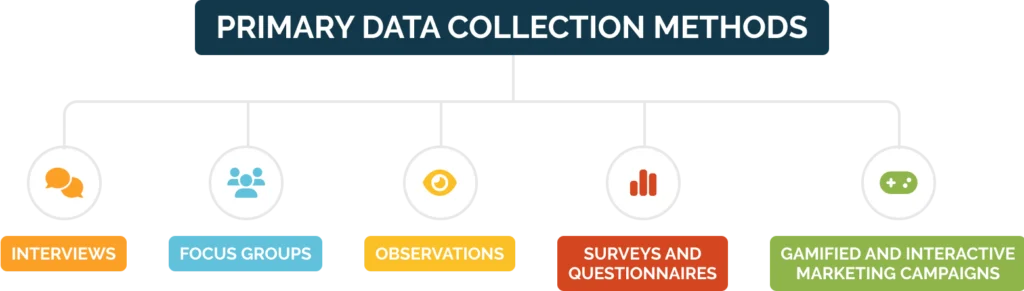
Here are some examples of popular primary data collection methods and how they’re used across various industries:
Interviews
One-on-one interviews allow businesses to delve into a person’s thoughts and motivations in depth.
A fashion brand interviews customers in-store to learn about general preferences, likes, and dislikes.
Focus groups
Small groups of participants discuss a topic or test a concept, revealing their attitudes and emotional responses towards it.
A media company organises a focus group to evaluate a new streaming platform before launch.
Observations
Observing real-time behaviour, especially online, can provide unbiased insights without needing direct interaction.
A tech brand tracks user navigation on its website to identify interest in specific products.
Surveys and questionnaires
Structured surveys and questionnaires are useful for gathering large volumes of data quickly, often related to satisfaction, preferences, or experiences.
A sports club launches a survey via a QR code during a game to collect feedback on the stadium experience.
Gamified and interactive marketing campaigns
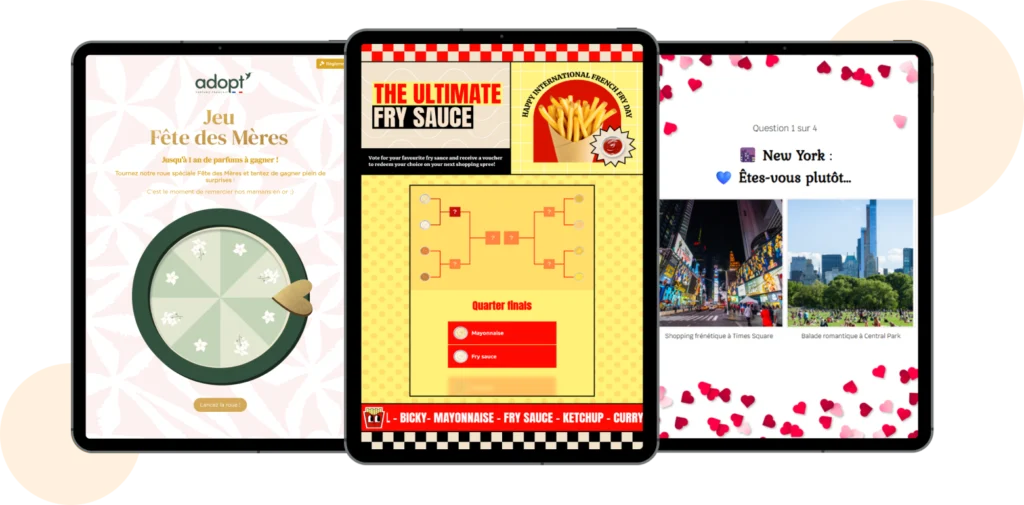
These campaigns offer an engaging way to collect zero-party data, as users voluntarily share information in exchange for value: a moment of fun, rewards, or simply an enhanced experience with a business.
A meal kit brand launches a “Find your cuisine” personality test. Users answer a few questions to discover their cuisine match, sharing their name and email to claim a free kit, and may also opt in for future communications.
Interactive marketing campaigns are compelling because they combine data collection with brand engagement, not only succeeding at gathering insights but also forging a connection between brands and users.
Secondary data collection and uses
Secondary data collection involves using information that other individuals, organisations, or institutions have already gathered. This data can include public records, third-party research, academic records, or industry reports.
Since the data already exists, secondary data collection is usually faster and more cost-effective than collecting primary data from scratch. However, secondary data isn’t always optimal. It may be outdated, lack specific details and business needs, or originate from sources with limited transparency, which can lead to misinformed strategies.
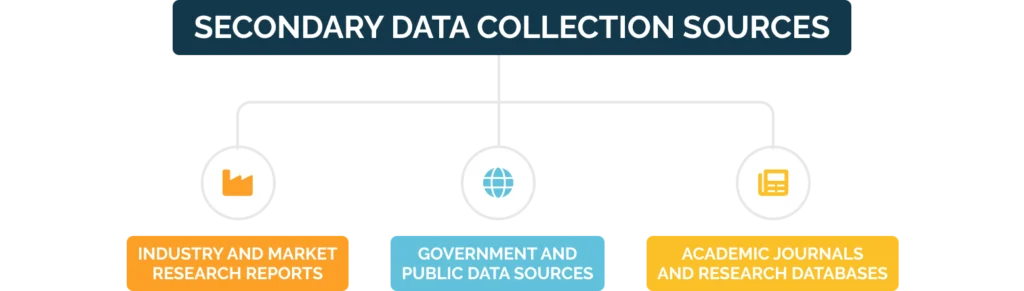
Still, in some cases, it can support market understanding and trend forecasting for high-level decision making. These are some common sources of secondary data:
Industry and market research reports
These reports, often published by research firms, provide insights into specific industries or markets, including consumer behaviour, category trends, regional growth, and more.
An FMCG brand explores new product lines, accessing a report on emerging drinking habits in urban Europe.
Government and public data sources
National statistics offices and other public institutions publish a wide range of data, from demographics and employment figures to health and education trends.
A sports club analyses population growth and income across cities where they want to expand their fandom.
Academic journals and research databases
These include peer-reviewed studies, white papers, and research from universities or think tanks. Topics often range from consumer psychology to sustainability or digital behaviour.
A fashion brand leverages academic insights on Gen Z attitudes towards ethical production to shape campaign messaging.
Types of data collection by nature of the data
Another way to categorise data collection methods is by the nature of the data being gathered. In this case, we distinguish between quantitative and qualitative data. Each serves a different purpose and is better suited for specific kinds of business goals.
What is quantitative data collection?
Quantitative methods collect data that can be measured and analysed statistically. These are useful when businesses need clear, numerical insights that can support decision-making at scale.
Common quantitative methods include:
- Online polls and surveys, with structured questions that generate measurable responses.
- Website and app analysis, which automatically track user behaviour and interactions.
- Transactional data gathering, revealing purchase history, form completions, downloads, etc.
These are some example questions that quantitative insights can help businesses answer:
- How many people clicked on a button?
- What percentage of page viewers did this form convert?
- How often do consumers purchase a product?
Quantitative data is excellent for identifying patterns, tracking KPIs, and benchmarking performance over time. It’s often visualised through dashboards, charts, and automated reporting tools.
What is qualitative data collection?
Qualitative data collection methods aim to understand the why and how behind audience behaviours. It involves gathering non-numerical information, such as opinions, motivations, or emotional responses.
Common qualitative methods include:
- Interviews and open-ended surveys, which allow participants to express themselves in their own words.
- Focus groups, which create small discussions that explore perceptions and attitudes.
- Observations, where users are monitored as they interact with content, products, or services.
These are some examples of how businesses leverage qualitative insights:
- Understanding why a shopper abandoned their cart.
- Discovering how fans emotionally connect with a sports team.
- Exploring why a user chooses one product over another.
This kind of data is typically analysed thematically to identify patterns, stories, and deeper emotional drivers.
Why focus on zero-party data as a business?
As businesses adapt to a world without third-party cookies and increasingly strict privacy regulations, zero-party data has become a highly valuable resource. This is data that individuals provide voluntarily, such as their preferences and interests, making it both very accurate and ethically gathered.
Because zero-party data is offered willingly, it is uniquely suited for building trust, personalising experiences and offers, and improving audience loyalty.
However, not all data collection methods are equally effective when it comes to gathering zero-party data:
- Secondary methods often lack relevance, since they initially collect data intended for different purposes that may even be outdated.
- Qualitative methods, such as interviews or focus groups, can provide rich insights, but are challenging to implement on a large scale and may cause participants to feel biased or uncomfortable sharing information.
To collect zero-party data successfully, businesses must create digital experiences that are engaging and invite participants to share their data voluntarily. This is where interactive marketing campaigns shine, including:
- Gamified contests.
- Interactive quizzes and surveys.
- Contests based on user-generated content.
- Personality tests.
- Gift guides.
With the Qualifio platform, businesses can easily create and launch interactive marketing campaigns across their digital channels to reach broad audiences. These experiences are effective at collecting first- and zero-party data while boosting engagement, providing insights that can be used to personalise experiences and offers, and ultimately driving loyalty and measurable results.
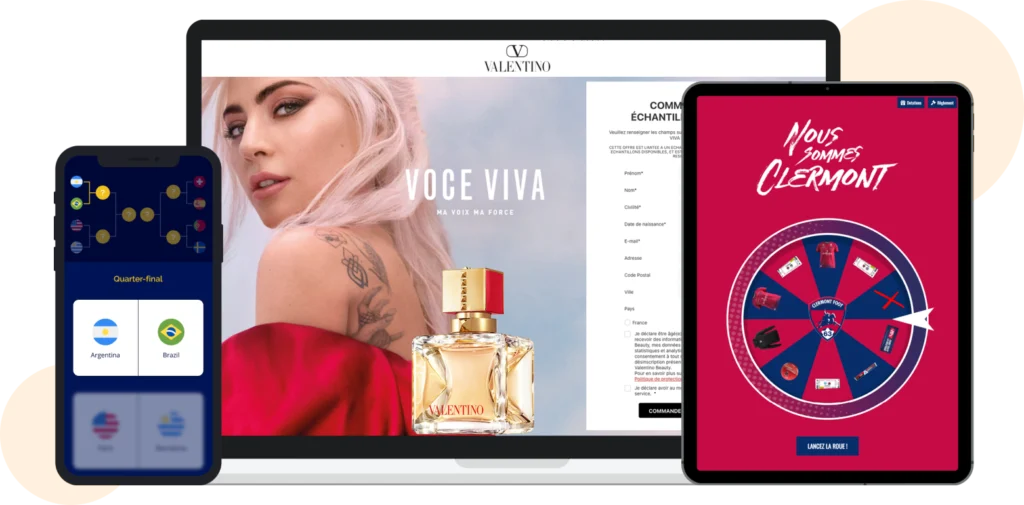
Curious about how different top brands use Qualifio? Here are some examples:
How L’Oréal collect data at a large scale across Europe
The beauty giant uses Qualifio for dozens of their brands in the EMEA market. In just over a year, they launched 700 interactive marketing campaigns to collect data from their audience, including their name, email address, and personal preferences:
- These campaigns attracted 5.5 million users to register on their websites
- These represented 60 to 70% of the total participants

How Unidad Editorial monetise their readers through data
This major player in the Spanish media market launches a variety of campaigns in newspapers, such as Marca, which attract over 40 million participations annually.
Their goal is not only to engage their audience and extend their interaction with news articles, but also to collect their zero-party data. Thanks to this data, Unidad Editorial can understand reader interests and preferences, monetising them through advertisers.

How Moulinex get to know their consumers with a reward program
Moulinex, a brand of the small domestic appliance leader Groupe SEB, operate a reward program created with Qualifio. In this reward program, Moulinex consumers can take part in interactive marketing campaigns, from engaging games to quizzes and other campaigns where they can share zero-party data.
In return for their engagement and data sharing, members of the program earn points that they can exchange for exclusive rewards, which encourage them to return to the program recurrently for more points.